Concrete Sealing in Clarksville, TN

Professional Concrete Sealing in Clarksville
Clarksville Exterior Cleaning offers a variety of concrete sealing options to match the surface, its condition, and the appearance you want to achieve. Our clear concrete sealers are available in satin, gloss, and high-gloss finishes, giving homeowners several choices for protecting and enhancing driveways, patios, sidewalks, and other exterior concrete surfaces.
We also offer colored concrete sealing options and concrete staining followed by sealing for customers who want to change the appearance of their concrete. These are different finishing options, but they share an important requirement: thorough surface preparation. We clean and prepare the concrete before applying the selected product, following the appropriate application process for that particular finish.
Concrete sealing helps protect driveways, sidewalks, patios, porches and other concrete surfaces from moisture, weather exposure, oil, automotive fluids and other contaminants. Clarksville Exterior Cleaning provides professional concrete sealing using the type of sealer and application process best suited to the concrete, its condition and the property owner’s goals.
Since 1999, we’ve understood that exterior surfaces aren’t one-size-fits-all, and concrete is no different. We measure the areas to be serviced, evaluate the condition and surroundings, and provide an exact cost quote before work begins. Proper cleaning and surface preparation are included as part of our concrete sealing process so we control the condition of the surface before applying the sealer. We also protect nearby siding, garage areas, landscaping and other surfaces as needed while completing the work professionally and carefully.
Protect Your Concrete with the Right Sealer
Not every concrete sealer is designed to accomplish the same thing. Some sealers penetrate into the concrete to help reduce moisture and contaminant absorption, while others provide more protection at the surface. Clear sealers can preserve the natural appearance of the concrete, while colored concrete sealers can provide protection while also changing or refreshing its appearance.
We select the sealer based on the condition of the concrete, how the area is used, its exposure to weather and surrounding conditions, and what the property owner wants to accomplish. A driveway exposed to vehicle traffic, oil and antifreeze has different concerns than a covered porch or patio. Trees, shade, drainage and other conditions around the concrete can also affect the appropriate product and application process.
Our goal isn’t to sell every customer the same product or application. It’s to use our experience to recommend a sealing system that makes sense for the particular concrete and the protection or appearance the customer wants.
Our Concrete Sealing Process
A professional concrete sealing job begins before the sealer is applied. During our initial assessment, we measure the concrete areas to be serviced so we can accurately determine the amount of cleaning, preparation and sealing product the job will require. We evaluate the concrete, take photographs when needed, consider surrounding conditions and provide an exact cost quote based on the actual work involved.
Concrete cleaning and surface preparation are performed by Clarksville Exterior Cleaning as part of our sealing service. This gives us control over the condition of the surface before any sealer is applied. Once the concrete is properly prepared, we protect nearby siding, garage areas, landscaping and other surfaces when necessary to help prevent overspray or unwanted product exposure.
Most concrete sealing projects receive two coats for consistent coverage and protection. Some previously sealed or colored surfaces may only require a maintenance recoat depending on their condition and the customer’s request. After application, we’ll explain when the area can safely be walked or driven on based on the particular sealer used and curing conditions.
They did an excellent job on my house and concrete ! The price was also reasonable. I would highly recommend them to anyone !
Read more reviews from our customers.
Is Concrete Sealing Worth It?
For many exterior concrete surfaces, sealing is worth it because it adds protection against moisture, staining and contaminants that can penetrate porous concrete. Driveways, sidewalks and patios are continually exposed to rain, weather, vehicle traffic, oil, antifreeze and other materials that can affect their appearance and condition over time.
Concrete sealing can help reduce water penetration, which is particularly valuable during freeze-and-thaw cycles when moisture inside porous concrete can freeze and expand. Depending on the sealer selected, it can also help reduce the penetration of oil, automotive fluids and other contaminants while making the surface easier to maintain.
Concrete sealing isn’t a substitute for routine cleaning and maintenance, and not every concrete surface needs the same type of sealer. The condition of the concrete, how the area is used, its exposure to weather and what the property owner wants to accomplish should all be considered before deciding whether sealing makes sense.
Protecting Concrete from Winter Weather and Road Salt
Winter weather can be especially hard on concrete driveways, sidewalks, patios and other exposed surfaces. Even in Clarksville, Tennessee, where winters are generally milder than in northern states, freezing temperatures, snow, ice and repeated temperature changes can take a toll on unprotected concrete.
One of the biggest concerns is moisture entering the concrete before temperatures drop below freezing. Concrete is naturally porous, allowing water to penetrate small openings within the surface. When that moisture freezes, it expands and creates internal pressure. Repeated freezing and thawing can contribute to surface scaling, flaking, pitting and deterioration over time.
Road salt creates another concern that homeowners often overlook. During winter storms, highway and road crews spread deicing materials to improve driving conditions. Those materials can be carried directly onto residential driveways by vehicle tires, tracked-in snow and slush, and melting ice. Even homeowners who never apply salt to their own concrete may still experience exposure to road-treatment chemicals.
Salt-contaminated moisture can increase the risk of freeze-thaw damage, particularly when concrete remains saturated during changing winter temperatures.
Professional concrete sealing provides an additional layer of protection by helping reduce the amount of water and deicing contaminants that enter the concrete from above. While no sealer can prevent every form of concrete deterioration, selecting the appropriate concrete sealing system and maintaining it over time can help protect the surface against seasonal exposure.
Protecting your concrete before winter weather arrives is a practical step toward preserving its appearance, reducing avoidable surface damage and extending its useful service life.
How Much Does Concrete Sealing Cost?
The cost of concrete sealing varies depending on the size of the area, condition of the concrete, amount of cleaning and surface preparation required, type of sealer selected and the number of coats needed. Previously sealed or colored concrete may also require a different preparation or application process.
Clarksville Exterior Cleaning provides a free on-site evaluation so we can measure the concrete, inspect its condition, discuss the protection and appearance you’re looking for, and determine the appropriate sealing process. We then provide an exact cost quote before work begins, so you know what the project will cost before deciding to move forward.
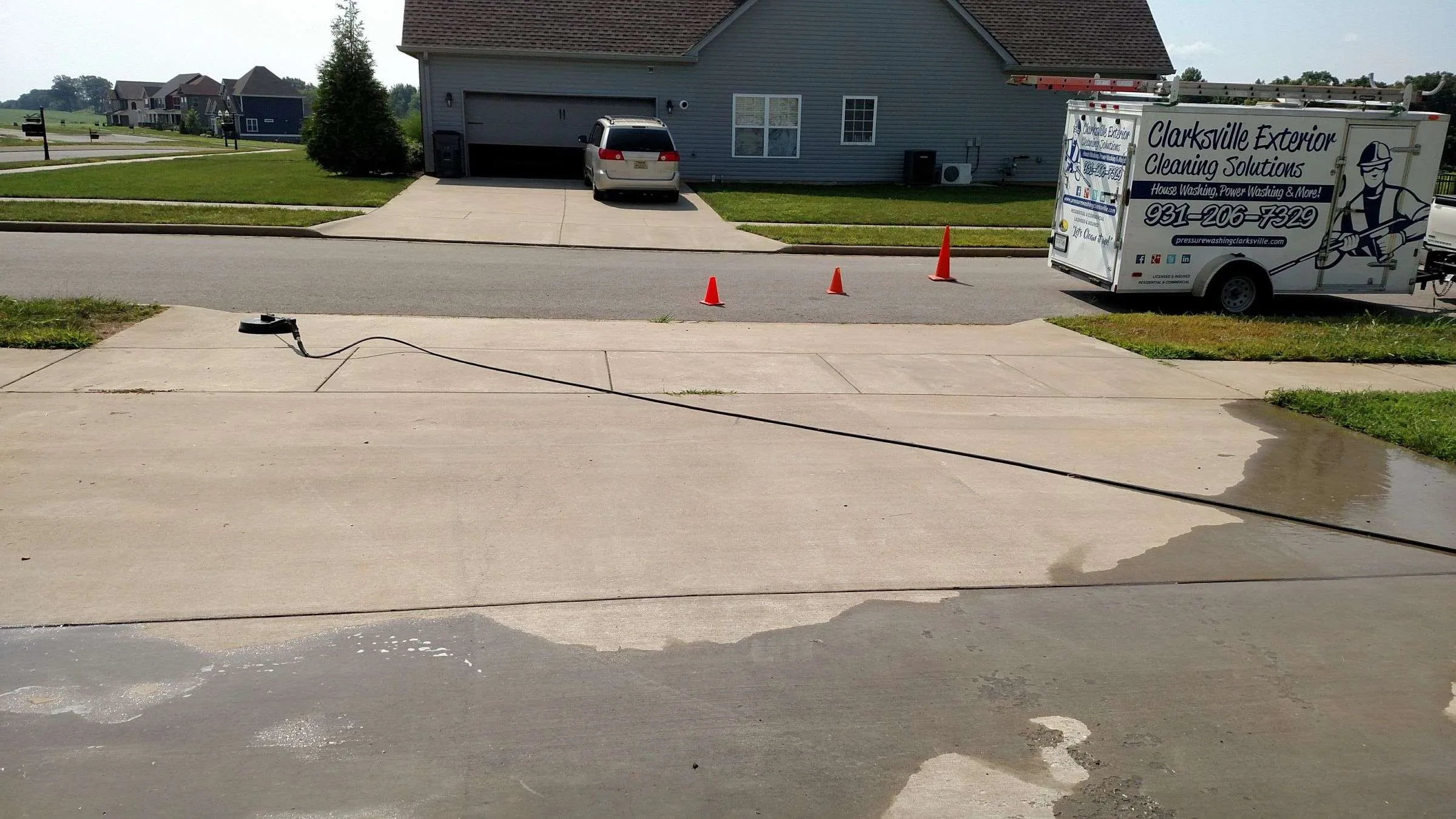
Professional concrete cleaning and surface preparation are included as part of our sealing service when needed, rather than applying sealer over dirty or improperly prepared concrete.
Does Concrete Sealer Really Protect Concrete?
Yes. When the appropriate sealer is properly applied to correctly prepared concrete, it can provide meaningful protection against moisture penetration, staining and everyday contaminants. Concrete is porous, so unsealed surfaces can absorb water, oil, automotive fluids and other materials that come into contact with them.
The type of protection depends on the sealer being used. Penetrating sealers work below the surface to help reduce water and moisture absorption while allowing the concrete to maintain a natural appearance. Other sealing systems can provide additional surface protection and may also change the color, sheen or overall appearance of the concrete.
Concrete sealer does not make concrete indestructible or eliminate the need for maintenance. Cracks, existing deterioration and other structural problems are not repaired simply by applying sealer. Sealing provides an added layer of protection—it is not an insurance policy that damage, staining or deterioration will never occur. The purpose of sealing is to help protect properly prepared concrete from future exposure, not hide or repair existing damage.
How Often Should Concrete Be Sealed?
How often concrete should be sealed depends primarily on the type of sealer used, the condition of the concrete and the amount of exposure and traffic the surface receives. As a general guideline, concrete should typically be evaluated for resealing within five years or less, rather than assuming one application will protect the surface indefinitely.
Some concrete sealing systems and conditions may call for resealing every two to three years. Concrete may also be a good candidate for sealing immediately after professional cleaning, when the surface has been properly prepared and suitable weather and drying conditions are available.
Instead of relying strictly on the calendar, the existing sealer and condition of the concrete should be evaluated to determine whether additional sealing is appropriate. Clarksville Exterior Cleaning can inspect the surface and recommend a sealing schedule based on the concrete and the type of sealer being used.
How Long Does Concrete Sealer Take to Dry?
Drying and return-to-service times depend on the type of concrete sealer being applied, as well as temperature, humidity and weather conditions. Some sealers may allow foot traffic within about an hour and vehicle traffic after approximately 24 hours, while other products require considerably more time.
Depending on the sealing system, instructions may require approximately 24 hours before foot traffic and 72 hours before vehicle traffic. Other products may allow vehicles to cross the surface after about 72 hours but recommend waiting up to seven days before parking a vehicle on the sealed concrete.
Clarksville Exterior Cleaning follows the requirements for the specific concrete sealer being applied rather than using one drying time for every project. Before we leave, we’ll explain when the surface can be walked on, driven across and parked on so you know exactly when normal use can safely resume.
Does Concrete Have to Be Cleaned Before Sealing?
Yes. Concrete should be properly cleaned and prepared before sealer is applied. Dirt, algae, mildew and other buildup can interfere with the sealing process, and applying sealer over a contaminated surface can trap unwanted material beneath the sealer.
Clarksville Exterior Cleaning includes the necessary concrete cleaning and surface preparation as part of our sealing process when needed. After cleaning, the concrete must also be allowed to dry appropriately before sealing. The required drying time can vary depending on the condition of the concrete, weather and the sealing product being used.
Proper preparation is one of the most important parts of a successful concrete sealing project. The goal isn’t simply to put sealer on concrete—it’s to prepare the surface correctly so the selected sealer can perform as intended.
When Should New Concrete Be Sealed?
New concrete should be protected with an appropriate sealer as soon as the concrete has cured sufficiently for the sealing product being used. There is not one waiting period that applies to every concrete sealer. Some penetrating sealers may be suitable for new concrete after approximately 14 days under appropriate conditions, while other products require the concrete to cure for 28 days or longer before application.
The type of sealer, concrete condition, moisture content and weather conditions all need to be considered before sealing new concrete. Applying a sealer too early for that particular product can interfere with penetration, bonding or curing, which is why Clarksville Exterior Cleaning follows the manufacturer’s requirements for the sealer being applied.
When conditions and the selected product allow, we recommend sealing new concrete sooner rather than leaving it unprotected unnecessarily. The goal is to begin protecting the surface once it is ready for the appropriate sealer—not simply wait an arbitrary amount of time.
Can Old Concrete Be Sealed?
Yes. Older concrete can absolutely be sealed, and in many cases it can still benefit from the added protection a properly selected sealer provides. The age of the concrete alone doesn’t determine whether it can or should be sealed. Its current condition is much more important.
Before sealing older concrete, the surface should be evaluated for existing sealer, cracks, deterioration, staining, contamination and other conditions that could affect preparation or the performance of a new sealer. Older concrete may require additional cleaning or surface preparation before it is ready to accept the appropriate sealing product.
Clarksville Exterior Cleaning provides a free on-site evaluation so we can inspect older concrete in person and determine whether it is a good candidate for sealing. If sealing is appropriate, we’ll explain the options available and provide an exact cost quote before any work begins.
Does Concrete Sealer Change the Color or Appearance?
Concrete sealer can change the appearance of concrete, but it depends on the type of sealer selected. Some penetrating sealers are designed to protect the concrete while leaving the surface with a natural appearance and little noticeable change in color or sheen.
Other sealing systems can enhance the color of the concrete or provide a satin, gloss or higher-gloss finish. Colored sealing options can also be used when a property owner wants to intentionally change or improve the appearance of suitable concrete.
Clarksville Exterior Cleaning discusses the desired appearance with the property owner before selecting a sealer. If you want your concrete to remain as natural-looking as possible, tell us. If you want more color enhancement or sheen, tell us that too. The sealer should be selected for both the protection needed and the finished appearance you’re trying to achieve.
Does Sealing Concrete Make It Slippery?
Concrete sealing does not automatically make concrete slippery. Traction depends on the type of sealer or sealing system being used, the texture and condition of the concrete, and whether water, oil or other materials are present on the surface.
Penetrating sealers generally have little effect on the natural surface texture because they penetrate into the concrete rather than forming a coating over it. Colored acrylic concrete sealers and other surface-forming systems can also be appropriate for driveways, sidewalks and other concrete surfaces when the product is properly selected and applied for the intended use.
Clarksville Exterior Cleaning considers the location, surface condition, desired appearance and how the area will be used before recommending a sealing system. We are particularly cautious about applying clear high-gloss acrylic directly over bare concrete, where differences in porosity, absorption and the concrete itself can create variations in the finished appearance.
Regardless of the concrete sealing system, water, oil, automotive fluids and other materials on the surface can create slippery conditions, just as they can on many other hard surfaces.
Ready to Protect Your Concrete?
Whether you’re considering concrete sealing for a newly installed surface, protecting an existing driveway or patio, or determining whether previously sealed concrete is ready for another application, Clarksville Exterior Cleaning can help you determine the appropriate next step.
We’ll inspect the concrete, discuss how the area is used and what you want to accomplish, and explain the concrete sealing options appropriate for the surface. You’ll receive a free on-site evaluation and an exact cost quote before any work begins, with no hidden fees or surprises after the project is underway.
At Clarksville Exterior Cleaning, going the extra mile for our customers means more than simply completing a job. It means standing behind our work, being available when customers need us, and treating every property with the care and respect it deserves. Our professional exterior cleaning services are backed by our 30-Day Customer Satisfaction Guarantee. That’s the kind of commitment we’ve brought to our customers since 1999.
Still Unsure Which Concrete Sealing Option Is Right for You?
Choosing the right concrete sealer depends on the condition of your concrete, how the area is used, and the protection or appearance you’re looking for. If you’re still weighing your options or have questions about concrete sealing, we’re just a phone call or contact form away. We’ll be happy to answer your questions, explain the available options, and help you make an informed decision. We’re also available to answer questions about any of our other products and services. No pressure, just straightforward answers from experienced professionals.
Ready to get started?
Request your exact cost quote for professional concrete sealing, or contact us if you have a question about your concrete or our concrete sealing service.